
Sewer Camera Inspection in Greeley, CO
Want to know what’s really going on inside your sewer line? A sewer camera inspection in Greeley shows the pipe from the inside, so you can see roots, cracks or a sag with your own eyes before anyone quotes a repair. Call SewerProof Greeley to talk to a local sewer pro about a camera check.
Talk to a local sewer pro
See inside your sewer line
Tell us what’s happening. A local pro will explain what a camera check covers and what it costs.
What is a sewer camera inspection?
A sewer camera inspection is a video check of the pipe that carries waste from your house to the City sewer. A small waterproof camera on a long cable is pushed into the line, usually through the cleanout. You watch the inside of the pipe on a screen while a counter shows how far the camera has gone. It’s also how a pro checks for a cracked line behind a sewer smell in the house.
It’s also called a sewer scope, a sewer line inspection, a drain camera inspection or a video camera inspection. They’re all the same service. Because every problem is recorded with its distance, a sewer pro can tell you where it is and, with a locator, how deep the pipe sits. That’s what makes a small, targeted repair possible.
On this page 11 sections
- When should you get a sewer scope in Greeley?
- What does a sewer camera inspection show?
- Your home’s age and what the camera often finds
- Your line or the City’s?
- How a sewer inspection in Greeley works, step by step
- Example of camera inspection findings
- Buying a home? Scope before your deadline
- How much does a sewer camera inspection cost in Greeley?
- After the inspection: what comes next
- Questions to ask before a camera inspection
- Frequently asked questions
When should you get a sewer scope in Greeley?
These are the most common reasons homeowners and buyers book a sewer scope inspection in Greeley:
How often should you scope your line? There’s no fixed rule. Many inspectors suggest a check every few years for older lines or yards with big trees, and right away after any backup.
What does a sewer camera inspection show?
The camera shows the inside of the pipe as it really is. These are the problems it finds most often:
It also shows where your line meets the City main, so you know which side the problem is on before you pay for anything.
Your home’s age and what the camera often finds
The age of your house says a lot about what kind of pipe is underground. These are general patterns, not rules:
Home built | Common sewer pipe | What a scope often shows |
|---|---|---|
Before about 1950 | Clay | Roots at joints, cracked or shifted sections |
About 1945 to 1973 | Orangeburg fiber pipe in some homes, plus clay and cast iron | Pipe flattening at the bottom, roots, collapse |
Through the 1960s and early 1970s | Cast iron | Rust and scale inside, cracks along the bottom |
1980s and newer | PVC | Usually sound pipe; sags, offset joints or construction debris |
Greeley has homes from many decades, so the pipe under any one house could be anything in this table. New sewer service lines in Greeley today are PVC SDR 35.
Your line or the City’s?
The City of Greeley maintains about 390 miles of sewer pipeline and 11 pump stations. City crews check the public system with their own camera equipment and clean it every 18 to 20 months. Rules differ by town; our Johnstown sewer repair guide covers who owns the line there, plus new-build backups and builder warranties.
The service line from your house to the main is yours to maintain, so the City doesn’t scope it for you. A camera sewer inspection in Greeley, CO shows your whole line and where it meets the main. If the problem is in the main, call the City’s sewer line, listed on its website.
Who pays for what
Want to see inside your line?
Call and ask for a camera check. A local sewer pro can explain what they’ll look for and what it costs before anyone comes out.
How a sewer inspection in Greeley works, step by step
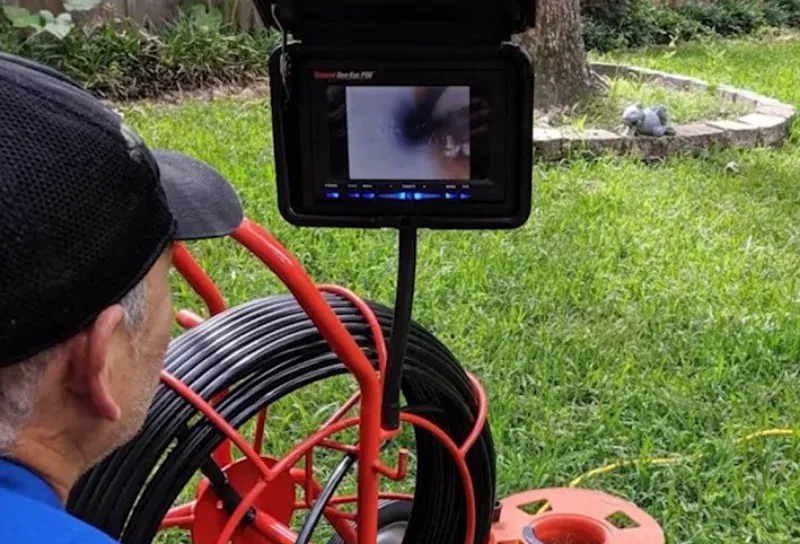
Most inspections take about 15 minutes to an hour, depending on access and what the camera finds.
No cleanout? Here’s what that means
Without a cleanout, the camera usually goes in through the lowest toilet. The toilet is pulled, the line is checked, and the toilet is reset on a new wax ring. It works, but it takes longer, costs more and carries more risk of a mess inside. A roof vent is another option, but it’s harder to work from. If your home has no cleanout, ask about adding one.
What the camera can’t see
What you should get afterward
Watch out for the cheapest scope. A very low price can mean no locating, no written report or a low-quality camera. Ask what’s included before you book.
Example of camera inspection findings
A good report turns the video into a simple list. Here’s what one can look like:
Distance | What the camera saw | What it usually means |
|---|---|---|
0 ft | Cleanout, pipe clear | Starting point |
22 ft | Fine roots at a joint | Clear the roots, then watch or seal the joint |
41 ft | Water standing in the pipe | Possible belly; check again after cleaning |
58 ft | Joint shifted out of line | Offset joint; monitor or repair |
64 ft | Connection at the City main | End of your service line |
This is a sample to show the format. Your report depends on what’s in your line. Most findings fall into three groups: monitor, clean or repair.
Buying a home? Scope before your deadline
A standard home inspection usually doesn’t include the sewer line, so many buyers add a camera check during the inspection period. Book it early so there’s time for a repair quote before your deadline. For Colorado contract deadlines and what to ask the seller for, see our guide to a sewer scope before buying a home in Greeley.
Do I need a sewer scope for a new build?
It’s worth considering. A new line can still have construction debris inside, a low spot from poorly packed soil, or a joint that shifted. A scope before your builder’s warranty ends gives you time to ask the builder to fix it. Check your warranty to see what’s covered and for how long.
How much does a sewer camera inspection cost in Greeley?
These are typical 2026 prices for a video sewer inspection in Greeley and nearby Northern Colorado towns:
Type of inspection | Typical range |
|---|---|
Added to a home inspection | $150 to $250 |
Standalone camera inspection | $175 to $350 |
No cleanout or hard access | Can cost more; ask first |
Ask whether the fee counts toward a repair if you hire the same company, and whether a written report and a copy of the video are included. Our repair cost page covers what fixes usually cost.
After the inspection: what comes next
The footage points to the fix. Here’s how common findings usually line up:
What the camera found | Usual next step |
|---|---|
Grease, buildup or a clog | Clearing or jetting the main line |
Roots at one or two joints | Clearing, then sealing the entry point |
One crack or bad joint | A spot repair at that distance |
A low spot holding water | A closer look at the belly |
Cracks along much of the line, pipe still round | |
Collapse or failing pipe along the line | A new line |
Distance matters. If the damage is in one spot, a small repair at that spot may be all you need. And if the pipe is damaged, check your homeowners policy: a service line endorsement may cover the pipe itself. See what insurance covers for sewer lines.
Questions to ask before a camera inspection
Frequently asked questions
Talk to a local pro about a sewer camera inspection in Greeley
Tell them what’s happening, ask what the camera check includes and what it costs, and see the inside of your line before you decide on any repair. One call, any hour, gets you a local sewer pro who handles sewer line inspection in Greeley and nearby towns.