
Sewer Line Belly in Greeley, CO
Told your line has a belly? A sewer line belly in Greeley is a low spot where the pipe has sunk and holds water. Some only need watching, others need that section dug up and re-sloped. Call SewerProof Greeley to talk to a local sewer pro who reads the footage with you and tells you which one you have.
Talk to a local sewer pro
Told you have a belly?
Tell us what the camera showed. A local pro will explain how serious it is and what the fix should be.
What is a belly in a sewer line?
A belly is a section of sewer pipe that has sunk lower than the pipe on either side of it. Instead of running downhill the whole way, the line dips, so water and waste settle in that low spot. You may also hear it called a sag, a sagging sewer line or a low spot in the sewer line.
A sewer line needs a steady downhill slope to drain. Greeley’s standard for sewer service lines calls for a slope of at least 1%, which is 1/8 inch of drop per foot, and no more than 8%. When part of the pipe settles below that line, gravity can’t move everything through, and the dip slowly fills with paper and solids.
What a belly looks like on camera
A camera inspection is how a belly is confirmed. Here is what a sewer pro looks for in the footage:
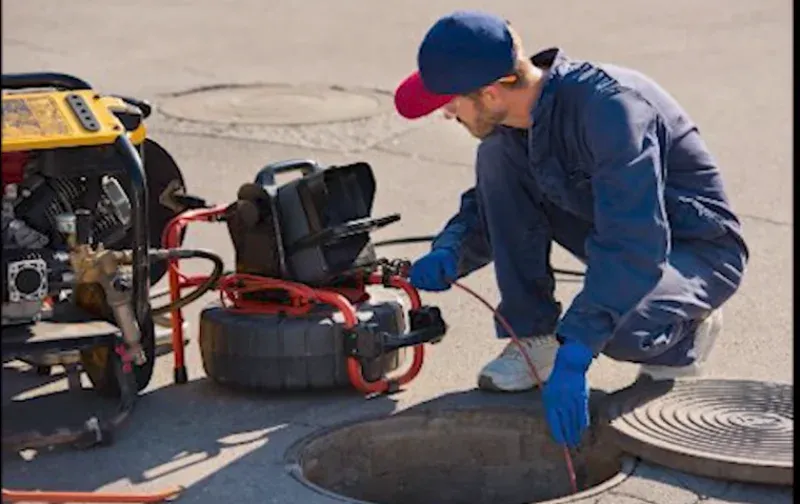
Ask for a copy of the footage, the distance to the start of the belly and how many feet it runs. Those numbers decide the fix.
Signs of a sewer line belly in Greeley homes
A belly rarely causes one sudden failure. It shows up as the same problem coming back:
These signs can also come from roots, an offset joint or a crack. Only a camera can tell you which one it is.
What causes a sewer line to sag?
A pipe sinks when the ground under it gives way or was never firm to begin with:
Belly, channeling, offset or collapse?
These problems can look alike in the footage, but they’re fixed differently:
Problem | What it is | Usual fix |
|---|---|---|
Belly (sag) | A section sank, so water pools in it | Watch it, or dig and re-slope that section |
Channeling (channel rot) | Old cast iron has worn through along the bottom | Lining or a new section, depending on how far it goes |
Offset joint | Two pipe ends have shifted out of line | Often nothing yet, or a spot repair |
Collapse | The pipe has broken or caved in | Dig at that spot, or a new line |
How serious is a belly in a sewer line in Greeley, CO?
Not every belly needs to be fixed right away. The depth of the water, how long the dip runs and what you’re seeing in the house decide it:
Severity | What the camera shows | What you notice | What to do |
|---|---|---|---|
Watch | Shallow water, short dip, pipe still round | Nothing, or a rare slow drain | Keep the footage and recheck in a year or two |
Schedule | Deeper water or a longer dip, some paper and solids | Clogs every so often | Plan maintenance clearing and get a repair price |
Fix now | Water close to the top of the pipe, solids building up, or a damaged pipe bottom | Repeat backups | Repair the section before the next backup |
A belly that holds water but doesn’t trap waste is often a watch item. A belly that keeps catching solids is the one that causes backups.
Not sure how bad your belly is?
Describe what’s happening and ask for a camera check. A local sewer pro can tell you whether to watch it or fix it before you pay for anything.
How do you fix a sagging sewer line?
The fix depends on the severity and how much of the line has sunk:
Fixing one short section works much like a sewer spot repair. If the whole line is failing, our sewer line replacement page walks through that job.
Can a sewer line belly be fixed without digging?
Usually not. Pipe lining puts a new liner inside the old pipe, and the liner takes the same shape, dip included. Cities that allow lining through a belly still treat digging and correcting the pitch as the standard repair.
Pipe bursting pulls a new pipe along the old path, so it usually keeps the same low spot unless the grade is corrected at that point. Jetting only clears what’s sitting in the dip.
If someone offers a no-dig fix for a belly, ask exactly how it will correct the slope, and get the method in writing. Our trenchless repair page explains where lining does work.
What does it cost to fix a belly?
Many bellies only need watching or regular clearing. These are typical 2026 ranges, smallest first:
Job | Typical 2026 range |
|---|---|
Camera inspection to measure the belly | $175 to $350 |
Hydro jetting to clear the low spot | $300 to $600 |
Dig and re-slope one short section | About $1,500 to $3,500 |
New line, when several sections have sunk | Typically up to about $6,500 |
Depth, what’s on top of the pipe (lawn or concrete) and how long the belly runs move the price most. Your exact price is set after a camera inspection.
Bellies in newer homes
A belly isn’t only an old-house problem. A newer line can sag if the trench wasn’t compacted well or the pipe was laid too flat. Trench soil often settles most in the first few years.
Will a bellied sewer pipe pass a sewer scope?
A sewer scope for a home sale doesn’t have a simple pass or fail. The inspector reports what the camera sees, and a belly is usually listed as a defect to watch or repair.
A short, shallow belly is often noted for monitoring. A deep or long belly that holds waste usually gets a repair recommendation.
Buying or selling with a belly
Found a belly in an inspection?
Send the details to a local sewer pro and get a straight answer on whether it needs work, and what it should cost.
Questions to ask before a belly repair
Frequently asked questions
Talk to a local pro about your sewer line belly
Tell them what you’re seeing, ask for the footage and the length of the low spot, and get a written answer on whether to watch it or fix it. One call gets you talking to a local sewer pro who handles sunken and sagging pipe in Greeley and nearby towns.