
Sewer Scope Before Buying a Home in Greeley: A Buyer’s Guide
A home inspection usually stops at the drains you can see. The sewer line runs under the yard, and in Greeley it becomes yours the day you close. Here’s when a scope matters, how it fits your Colorado contract deadlines and what to ask for if the camera finds a problem.
Talk to a local sewer pro
Inspection deadline coming up?
Call and tell us your deadline. A local sewer pro can explain what a scope will show and how fast you can get the video, written findings and a repair quote.
Should you get a sewer scope when buying a home in Greeley?
For most homes, yes. A standard home inspection usually doesn’t include the sewer line, and problems under the yard often show no signs. A scope is a short camera check of the line, done during your inspection period, so you can still ask for a repair or credit, or walk away on time.
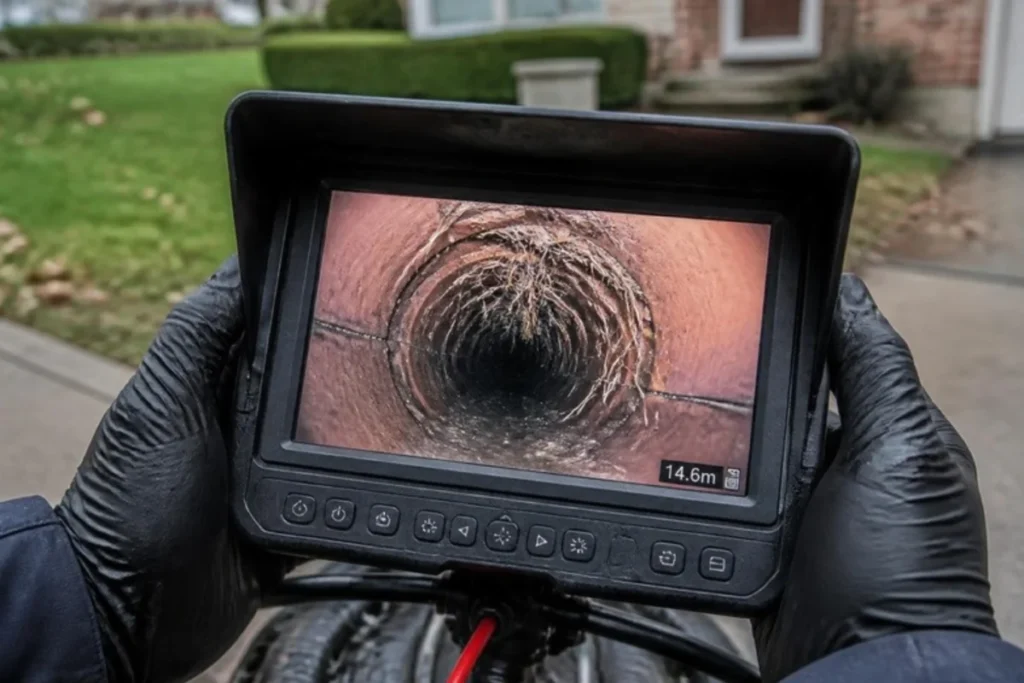
A sewer scope sends a small camera on a cable through the line, usually from a cleanout, and records video of the inside of the pipe. For how it works, what it shows and Greeley prices, see our sewer camera inspection page. This guide is about the buying decision.
On this page 12 sections
- When a scope matters most
- How the Colorado contract deadlines work
- Who pays for the sewer scope?
- The seller says there’s never been a problem. Should you still scope?
- What if the scope finds a problem?
- Can you back out of a home purchase because of sewer problems?
- When the camera can’t see the whole line
- Your line or the City’s?
- Why sewer lines in Greeley take a beating
- Does a new construction home need a sewer scope?
- After you buy: protect the line
- Frequently asked questions
When a scope matters most
A scope matters most when the home is older than about 20 years, has big trees near the line, has any history of backups or has been empty for a while. Older homes are common in Greeley: about 27% of homes in the city were built before 1970, and about 18% in the 1970s.
General rules of thumb for what you may find, by when the home was built:
When the home was built | Pipe you may find | What to watch for |
|---|---|---|
Before the 1970s | Clay pipe is common | Roots at joints, cracks, shifted sections |
About 1945 to 1973 | Orangeburg was used in some homes | Pipe that flattens or blisters with age |
Through the 1960s and early 1970s | Cast iron was a standard choice | Rust inside the pipe, cracks, rough buildup |
Newer homes | Plastic pipe is typical | Sags, poor joints, construction debris |
These are general patterns, not a rule for any street or neighborhood. Only the camera can tell you what’s under a specific home.
How the Colorado contract deadlines work
The Colorado Contract to Buy and Sell Real Estate sets dates for your inspection period. By the Inspection Objection Deadline you can send a written objection or end the deal. By the Inspection Resolution Deadline you and the seller need a written agreement, or the contract may end.
This is general information, not legal advice. Your agent, and an attorney if needed, can tell you how your contract applies.
Need findings before your deadline?
Call and give us your inspection dates. A local sewer pro can tell you how fast you can get the video, written findings and a repair quote for your objection.
Who pays for the sewer scope?
In most purchases the buyer orders and pays for the scope as part of their inspections. It’s your due diligence, so you pick who does it. Some sellers scope the line before listing and share the video, which is helpful, but many buyers still order their own.
Across the U.S., a sewer scope often costs somewhere around $100 to $500, depending on access and the area. For local prices, see our camera inspection page.
The seller says there’s never been a problem. Should you still scope?
Yes. A seller can only disclose what they know, and many sewer problems are silent. Roots, small sags and cracked joints can sit for years before the first backup. A scope isn’t a sign of distrust. It just shows you what the seller couldn’t see either.
Before the scope, ask the seller or their agent for:
What if the scope finds a problem?
Match your request to how serious the problem is. Roots or a small sag often mean clearing or a modest credit. Cracked joints often mean a spot repair. A collapsed line or Orangeburg pipe can mean a large credit, a lower price or ending the deal before your deadline.
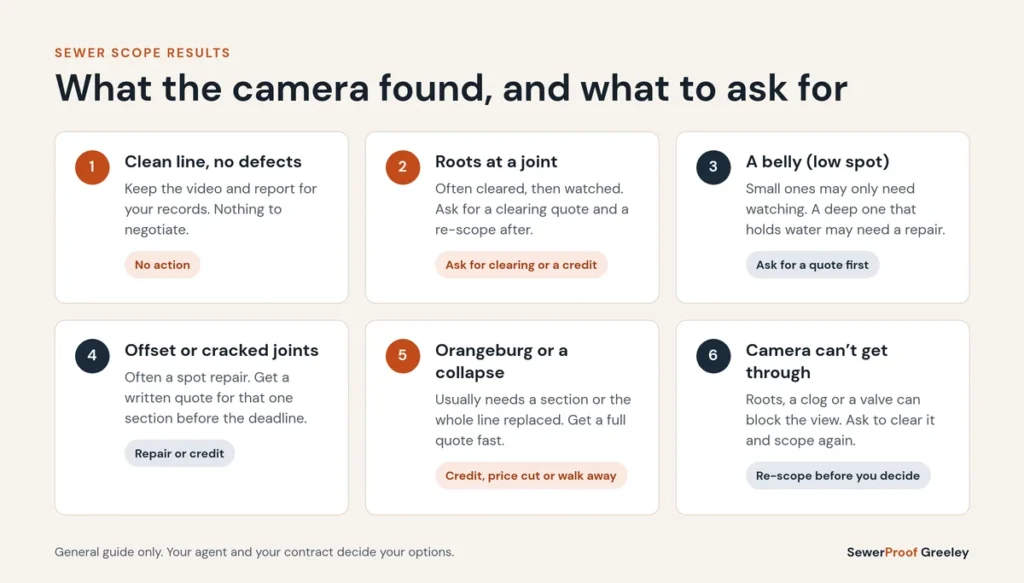
What the camera shows | How serious | Common requests |
|---|---|---|
Roots at one or two joints | Often minor at first | Clearing before closing, or a credit |
A small belly (low spot) | Often watch only | A quote, then a credit if it holds water |
Offset or cracked joints | Moderate | A spot repair or a credit for one |
Orangeburg pipe or a collapse | Serious | Replacement credit, a lower price or ending the deal |
Credits are often simpler than seller repairs, because you choose who does the work and can check it with your own camera after. If the seller does the repair, ask for the invoice and a new scope video before closing.
Can you back out of a home purchase because of sewer problems?
Often, yes, if you act before your inspection deadline. The standard Colorado contract lets a buyer end the deal over an unsatisfactory physical condition by giving written notice on time. Miss the date and you may lose that option, so get the scope done early.
How earnest money is handled depends on your contract and on meeting its deadlines. Talk to your agent before you send any notice.
When the camera can’t see the whole line
Sometimes the camera can’t reach the street. Heavy roots, a clog, a backwater valve or a sharp bend can stop it. If that happens, the report should say exactly where the camera stopped. Ask to clear the line and scope again before you decide.
Your line or the City’s?
In Greeley, the owner is responsible for the sewer service line from the house to the City main. The City maintains the main. So before you ask for a repair, find out where the problem is. The scope’s distance reading helps show whether it sits in the private line.
City records show where a line connects to the main, not the path it takes across the lot. See who owns the sewer line in Greeley for the full breakdown.
Why sewer lines in Greeley take a beating
Ground and age are the two big reasons. Many places on Colorado’s plains have clay soils that swell when wet and shrink when dry, which can disrupt buried pipes. Winters bring freeze and thaw. And older pipes, here and across the country, are reaching the end of their life.
Does a new construction home need a sewer scope?
It’s still worth it. New lines can be crushed by heavy equipment, left with construction debris inside or settle into a sag as the soil packs down. If you’re buying new, scope before closing or before the builder’s warranty ends so the builder can fix it.
After you buy: protect the line
Keep the scope video. It shows how the line looked on the day you bought it, which helps with any future repair. Many home policies don’t cover the sewer pipe, so ask your agent about a service line endorsement. See what home insurance covers for sewer lines.
Frequently asked questions
Buying a home in Greeley? Check the sewer line first
Tell a local sewer pro your inspection dates. You’ll get the camera video, written findings and, if needed, a repair quote you can use in your objection. Call any time about a sewer scope before buying a home in Greeley. More on Greeley sewer repair, from the camera check to the fix.