
Sewer Smell in Your House? Causes and Fixes in Greeley

Rotten-egg smell in the basement, the bathroom or the whole house? Most of the time sewer gas gets in through one of six spots, and several are cheap to fix. Find the source with the checks below, or call SewerProof Greeley 24/7 to talk to a local sewer pro.

Talk to a local sewer pro

Smell won’t go away?

Call and tell us where it’s strongest and when it shows up. A local sewer pro can tell you what to check first and what a visit costs.

  • Answered 24/7, nights and weekends
  • Ask for the price before work starts
  • Ask to see the camera footage
  • Answered 24/7, nights and weekends
  • Camera check before any dig
  • Price explained before work starts
  • Local Greeley-area sewer pros

Where sewer smell gets into a house

Sewer gas, the source of most sewer odor in Greeley homes, should stay inside the pipes. Every drain has a water-filled trap that blocks it, a vent on the roof lets it out, and seals at the toilet and cleanout keep it in. A sewer smell in the house almost always means one of those barriers has failed.

Six places sewer smell gets into a houseA cross-section of a house with a basement. Sewer gas can get in at six common spots: a blocked or cracked roof vent, a leaking toilet wax ring, a sink or tub trap or overflow, a dry basement floor drain trap, a loose cleanout cap, and a cracked sewer line under the yard that runs to the City main. The homeowner’s service line runs from the house to the main.BasementCitymain123456Your service lineCity’s jobWhere sewer smell gets in1 Roof vent blocked or cracked2 Toilet wax ring leaking3 Sink or tub trap, or overflow4 Dry basement floor drain trap5 Loose or missing cleanout cap6 Cracked sewer line in the yardSimplified drawing, not to scale.

The cheapest fixes sit at the top of the list: a dry trap or a worn toilet seal. A cracked line in the yard is less common, but it’s the one that needs a camera to find.

On this page 9 sections
  1. First: is it sewer gas, natural gas or something else?
  2. Find the source in 15 minutes
  3. Why the smell comes and goes
  4. Is sewer gas dangerous?
  5. How a pro finds a hidden sewer smell
  6. Fixes, from cheapest to biggest
  7. Your line or the City’s?
  8. Keep the smell from coming back
  9. Frequently asked questions

First: is it sewer gas, natural gas or something else?

Sewer gas smells like rotten eggs. So can other things in a home, and one of them is an emergency. Match what you notice to the likely cause:

  • Strong smell plus hissing, or near the stove or furnace Natural gas has a smell added so leaks can be noticed, and people mix it up with sewer gas. Leave the house, then call the gas company’s emergency line and 911 from outside.
  • Only when you run hot water Often bacteria in the water heater, not the sewer. Smell the cold tap too. If only hot water smells, ask a plumber about the water heater.
  • Only outside, across the neighborhood Greeley sits among farms, feedlots and a meatpacking plant, and outdoor odors can drift into town. The City runs an odor hotline for outdoor smells.
  • One sink or tub Usually a dry trap or gunk in the drain or the overflow hole. Run water and clean the overflow before calling anyone.
  • Basement or the whole lower floor Most often a dry floor drain trap. If water is fine and the smell stays, the cleanout cap or a pipe crack is next.
  • Smell plus slow drains or backups Waste isn’t flowing out freely. The main line may be partly blocked. See signs of a clogged main line.

If you suspect natural gas, don’t stay inside to look for the source. Get everyone out first.

Find the source in 15 minutes

Most sewer odor in Greeley homes can be traced with a nose and a bucket of water. Go room by room, lowest floor first:

  • 1 Pour water in every drain you rarely use. Basement floor drains, a laundry sink, a guest shower. About a gallon each refills the trap.
  • 2 Check the toilets. Rock each one gently. Look for water, staining or a smell at the base. A loose toilet often means a worn wax ring.
  • 3 Clean sink overflows. The small hole near the top of the sink collects slime that smells like sewage.
  • 4 Find the cleanout. It’s a capped pipe in the basement or near the house outside. Make sure the cap is there and tight.
  • 5 Note when it happens. After a shower, on windy days, when a fan runs, or all the time. The pattern points to the cause.
  • 6 Wait a day. If the smell fades after the traps are full, you found it. If not, the problem is likely a vent, a seal or a pipe.

Sewer gas at the low levels found in homes mostly irritates. But your nose can get used to a smell after a while, so ask someone who just came in whether they still notice it.

Why the smell comes and goes

A smell that appears and disappears is still a clue. These patterns usually point to one cause:

When you notice it

What it often means

First step

After coming home from a trip

Traps dried out while drains sat unused

Run water in every drain

On windy days

Air at the roof vent pushes gas back down, or the vent is cracked

Ask a plumber to check the vent

When an exhaust fan or dryer runs

The fan pulls air from the house, and it can pull gas through a dry trap or a loose seal

Refill traps, then check toilet seals

After a shower or a flush

A worn wax ring or a slow drain lets gas escape at the fixture

Check the toilet base and that drain

At night, with windows closed

Less fresh air, so a small leak builds up

Find the room where it’s strongest

With slow drains or gurgling

The main line is partly blocked

Clear the line, then a camera check

In Greeley’s dry air, water in an unused trap can disappear faster than you’d think. That’s why basement floor drains are such a common source. Drains that gurgle as well point to a vent or a slow line; see gurgling drains.

Still smell sewer after refilling the drains?

Call any time, day or night. A local sewer pro can tell you whether it sounds like a seal, a vent or the line itself, and what the visit costs.

Is sewer gas dangerous?

At the levels usually found in homes, sewer gas is more of an irritant than a poison. Hydrogen sulfide, the gas behind the rotten-egg smell, can irritate the eyes and throat and cause headaches. Very high levels are dangerous, but state health guidance says those aren’t expected in a home.

  • Air it out Open windows and run fans to the outside while you look for the source.
  • Don’t trust your nose alone You can stop noticing a smell after a while. That doesn’t mean it’s gone.
  • Call if anyone feels sick Headaches, eye or throat irritation that ease when you leave the house are a reason to find the source soon.

How a pro finds a hidden sewer smell

When the easy checks don’t solve it, the source is usually hidden in a wall, under the floor or in the yard. Smell outside too, over a wet spot? See soggy yard over the sewer line. These are the common tools:
  • Camera inspection A camera goes into the sewer line from the cleanout and shows cracks, separated joints and roots, with the distance to each. See sewer camera inspection.
  • Smoke test Harmless smoke is pushed into the drain pipes. Wherever it shows up inside, there’s a gap in a pipe, a vent or a seal.
  • Vent check The plumber checks the roof vent for blockage, cracks or a poor fit, and makes sure each fixture is vented.
  • Seal and fixture check Toilet wax rings, cleanout caps and old drain plugs get checked and replaced where they leak.
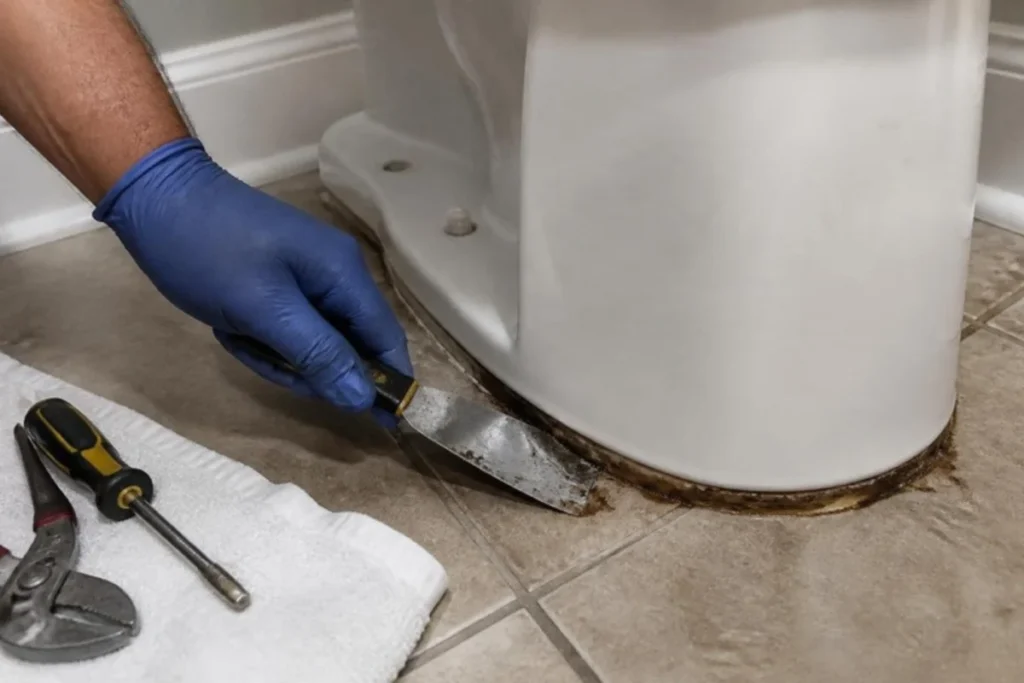
Plumber checking the toilet wax ring seal while tracing a sewer smell in a Greeley house
A worn wax ring at the base of a toilet is one of the most common sources of sewer smell.

Fixes, from cheapest to biggest

Most sewer smells end with a small fix. Start at the top:

Cause

Usual fix

Size of the job

Dry trap

Run water through the drain; a trap seal can help on drains that dry out often

Do it yourself

Slimy sink overflow or drain

Clean the overflow and the drain

Do it yourself

Loose or missing cleanout cap

Replace the cap

Small

Worn toilet wax ring

Pull the toilet and replace the seal

Small

Blocked or cracked vent

Clear or repair the vent pipe

Small to medium

Partly blocked main line

Clear the line, then a camera check

Clearing usually about $125 to $315

Cracked pipe or separated joint

Repair that section or line the pipe

Medium to large

A camera check usually costs about $175 to $350. If it finds a crack in one spot, a spot repair often fixes it without replacing the whole line. For full price ranges, see sewer line repair costs.

Your line or the City’s?

In Greeley, the City maintains the sewer mains, and residents are responsible for their own service line from the house to the main. A sewer smell inside the house almost always comes from your own plumbing or line.

If neighbors notice sewage in the street or several homes back up at once, the City main may be the problem. The City runs a 24/7 sewer line for that. See what to do in a sewer emergency.

Outdoor odors are a different call

Some smells in Greeley come from farms, feedlots or industry outside town, not from any sewer. The City has an odor hotline for outdoor smells. If the smell is only outside and drifts across the neighborhood, that’s the place to report it.

  • Inside only: check your own drains first
  • Outside, one spot in your yard: could be your sewer line
  • Outside, whole neighborhood: likely an outdoor odor

Keep the smell from coming back

A few habits keep sewer smell out of Greeley homes for good:

  • Run unused drains monthly About a gallon of water in basement floor drains and guest showers keeps the traps full.
  • Keep grease and wipes out Only pee, poop and toilet paper go in the toilet, the City says. Wipes go in the trash, even “flushable” ones.
  • Keep the cleanout capped Check the cap after any drain work. No outside cleanout? Ask about adding one.

Smell plus roots or slow drains that keep coming back? Read about tree roots in a sewer line. Outside Greeley? See the towns we serve.

Frequently asked questions

Most often a dry drain trap, a worn toilet wax ring, a loose cleanout cap or a vent problem lets sewer gas in. A cracked sewer line is less common. Start by running water in every drain you rarely use.

Usually a floor drain trap that dried out. Pour about a gallon of water into it. If the smell stays, check the cleanout cap and look for a crack in the line.

At the levels usually found in homes it mostly irritates the eyes and throat and can cause headaches. Air the house out and find the source. If you suspect natural gas instead, leave and call from outside.

Traps that dry out between uses, wind at the roof vent, exhaust fans pulling air, or a seal that leaks only when a fixture is used. Note when it happens; the pattern points to the cause.

Sometimes, especially with slow drains, gurgling or a soggy, smelly spot in the yard. A camera inspection shows whether the line is cracked or separated.

Inside the house, it’s your plumbing and your service line, so call a plumber or sewer pro. If the street or several neighbors are affected, the City main may be the issue.

Often very little. Refilling a trap is free, and a new toilet seal or cleanout cap is a small job. Clearing a main line usually runs about $125 to $315, and a camera check about $175 to $350.

Call about a sewer smell in Greeley

Tell a local sewer pro where the smell is strongest and when it shows up. Ask for the price before work starts and for the camera footage if they check the line. Call any time, day or night, about a sewer smell in your house in Greeley or a nearby town. More on Greeley sewer repair, from the camera check to the fix.