
Tree Roots in Sewer Line in Greeley, CO
Clogs that keep coming back in a yard with big trees? Tree roots in a sewer line in Greeley are one of the most common causes. Clearing them is often quick and affordable. Call SewerProof Greeley to talk to a local sewer pro who clears the roots, then shows you on camera where they got in.
Talk to a local sewer pro
Roots in your line?
Tell us what’s happening. A local pro will explain how the roots get cleared and whether the entry point needs a repair.
How do I know if tree roots are in my sewer line?
The clearest sign is a main line clog that comes back every few months, in a yard with large trees. Slow drains through the whole house, gurgling toilets and a backup in the basement floor drain point the same way. A camera inspection confirms it, because roots show up as a hairy mat inside the pipe.
Roots are a sign of a pipe problem, not the cause
Tree roots don’t break a sound sewer pipe. They follow moisture through the soil, and when they reach a joint that has pulled apart or a small crack that leaks, fine roots slip inside. With steady water and nutrients, they grow into a dense mat that catches paper and waste.
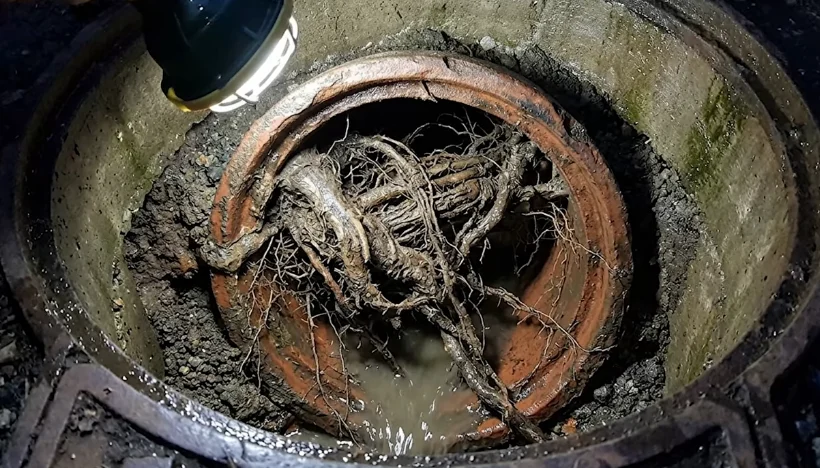
That’s why roots come back after the line is cleared. Cutting removes the mat, but the opening is still there. In older clay pipe, with a joint every few feet, there can be many openings. A camera inspection after clearing shows exactly where the roots are getting in.
Which trees cause sewer damage in Greeley?
Any tree can send roots into a leaking pipe, but some go looking for water harder than others. Ash trees alone make up around 15% of Greeley’s urban forest. These are the ones to watch near your sewer line:
Planting something new? City of Greeley rules say trees aren’t to be planted within 10 feet of either side of water, sewer or storm drain service lines, and planting in the parkway between the sidewalk and street needs a City permit.
Roots back again?
Describe what’s happening and ask for clearing plus a camera check. A local sewer pro can tell you whether to keep clearing or fix the spot where the roots get in.
How do you get rid of tree roots in a sewer line?
Getting roots out is a two-part job: clear the line now, then deal with where they got in.
Then decide how to stop them coming back:
Option | What it does | Best for |
|---|---|---|
Regular clearing | Cuts the roots back on a schedule | One or two entry points, a tree you want to keep, or a line you plan to fix later |
Replaces the bad joint or cracked section | Roots getting in at one place | |
A seamless liner seals every joint from the inside | Roots at joint after joint in pipe that still holds its shape | |
New pipe with tight, sealed joints | A line that is broken, sagging or failing along its length |
Will tree roots come back after cutting?
Usually, yes. Cutting removes the roots inside the pipe, but the tree is still there and the opening is still there. Many Greeley homeowners with big trees clear the line on a schedule:
Ask how long the clearing is guaranteed, in writing. A free return if the line backs up again within a set time is a good sign.
Clear or fix? The 10-year cost math
If roots keep coming back, it helps to add up what clearing costs over time and compare it with sealing the entry points once. These are typical 2026 ranges:
Approach | Typical cost | Over 10 years |
|---|---|---|
Clearing once a year | $125 to $600 per visit | About $1,250 to $6,000 |
Fixing the one joint that lets roots in | $600 to $1,050, one time | Plus an occasional camera check |
Lining the whole line | $1,900 to $6,000, one time | Joints sealed, roots kept out |
Camera inspection | $175 to $350 | Worth doing before you choose |
For a line with one or two entry points, a spot repair often pays for itself within a few years of clearing costs. For roots at joint after joint, lining can cost about the same as several years of clearing and ends the cycle. If you love the tree and the line only needs clearing every couple of years, regular clearing can be the sensible choice.
Your real numbers depend on what the camera shows. Our repair cost page has more on prices.
Do root killers, copper sulfate or root barriers work?
None of these fixes the opening. They can stretch the time between clearings, but sealing the joint or crack is what stops roots for good.
Should you cut down the tree?
Usually not first. Removing a big tree is expensive, the roots already in the pipe stay behind, and other trees can find the same opening. Clear the line and run a camera first. If the pipe is sealed with a spot repair or lining, the tree can usually stay.
If roots come from a neighbor’s tree or a tree in the parkway by the street, the opening in your pipe is still the thing to fix. For a tree in the public right-of-way, ask the City of Greeley Forestry office before any work near it.
Does homeowners insurance cover tree root sewer damage?
Usually not. Standard policies often treat root damage as gradual wear. Colorado’s Division of Insurance describes a separate service line endorsement that covers damaged utility lines on your property, including the sewer pipe.
A water backup endorsement can help with damage inside your home from a backup. Check your policy and call your agent.
Best time to check for roots
Roots back again?
Call any time. A local sewer pro can clear the roots and show you where they are getting in.
Frequently asked questions
Talk to a local pro about tree roots in your sewer line in Greeley
Tell them what’s happening, ask for clearing plus a camera check, and get a clear answer on whether to keep clearing or fix the spot where roots get in. One call, any hour, gets you a local sewer pro who handles tree root sewer damage in Greeley and nearby towns.